

Things to Do in Madagascar in January
January weather, activities, events & insider tips
Low Season · Budget Friendly
January Weather in Madagascar
Long-run averages for January in Antananarivo
79°F (26°C)
High Temp
63°F (17°C)
Low Temp
13.4 inches (340 mm)
Rainfall
79%
Humidity
16
Sunny-Day UV
⚠ Cyclone season peaks January through March in the southwest Indian Ocean. Madagascar faces tropical cyclones with winds exceeding 200 km/h (124 mph), flooding rains, and multi-day transport shutdowns affecting the entire island. Monitor forecasts daily through Meteo Madagascar. Have a sheltering plan ready if warnings issue. Your lodge staff knows local protocol and evacuation routes. Trust them.
⚠ Road flooding isolates entire regions for days. River crossings on national routes without permanent bridges become impassable within hours of heavy rain. They stay closed for days after rain stops. Never attempt a crossing where local taxi-brousse drivers wait. If the professionals who drive these roads daily have parked, the ford is unsafe.
⚠ Malaria risk jumps significantly during wet season across all Madagascar. This includes the highlands around Antananarivo where many assume safety. Prophylactic medication is strongly recommended. Consult a travel health clinic at least four weeks before departure. Sleep under treated mosquito nets even in tourist lodges. Apply repellent at dusk when Anopheles mosquitoes feed.
Is January Right for You?
Weigh the advantages and considerations before booking
Advantages
- + Wildlife at its most active. January coincides with lemur birthing season across Madagascar's eastern rainforests, meaning you'll likely spot infant indri, sifaka, and brown lemurs clinging to their mothers in Andasibe-Mantadia and Ranomafana. Chameleons and geckos are breeding and easier to find on night walks. Migratory birds from East Africa swell the species count past 280.
- + The island at its greenest and most dramatic. After months of dry brown hillsides, January's rains transform Madagascar into a wall of emerald. Waterfalls in Amber Mountain and Ranomafana run at full volume. Rice paddies across the central highlands flood into mirror-like terraces reflecting low cloud. The baobabs near the western coast leaf out completely, a sight most visitors never see because they come in the dry months when those trees stand skeletal against bare sky.
- + You'll have the national parks nearly to yourself. January is the lowest point of the tourism calendar. Trails that carry twenty guided groups a day in August might see two or three in January. At Andasibe, this means your guide can pause at an indri family for as long as you want without another group pressing past. The quiet changes the soundscape too. You hear the forest itself, the drip of canopy condensation and the low hum of insects, not other tourists.
- + Accommodation and domestic flight prices tend to drop meaningfully from dry-season rates. Lodges near the major national parks that require booking months ahead for July or August often have same-week availability in January. There's more willingness to negotiate on multi-night stays. You'll get better rooms for less. The staff will have time to talk to you.
Considerations
- − Cyclone risk is real and not abstract. Madagascar sits directly in the southwest Indian Ocean cyclone corridor, and January through March is the peak window. A cyclone doesn't just mean heavy rain. It can mean cancelled domestic flights for days, roads that dissolve into mud rivers, coastal evacuations, and total communication blackouts in rural areas. Your travel insurance needs to explicitly cover cyclone-related disruption. Your itinerary needs built-in flex days that you expect to use.
- − Large sections of Madagascar's road network become impassable. The Route Nationale 8 to Morondava and the Tsingy de Bemaraha, arguably the country's most well-known landscape, typically closes entirely during January. Southern routes toward Fort Dauphin flood at river crossings. Even the reasonably maintained RN7 between Antananarivo and Ranomafana can lose sections to washouts after a single bad night of rain. Overland journeys that take eight hours in the dry season can take two days or simply not happen at all.
- − Afternoon downpours are heavy and persistent, often lasting two to four hours in the central highlands. Thunder rattles windows and streets in Antananarivo turn into shin-deep streams within minutes. Unlike the quick cloudbursts of shoulder months, January storms can wipe out an entire afternoon. Mornings are your reliable outdoor window. Plan every excursion to start at dawn and wrap up by early afternoon.
Best Activities in January
Top things to do during your visit
January drops Madagascar into the depths of its wet season, when the island's eastern rainforests swell with moisture and the highlands around Antananarivo sit under towering cumulonimbus clouds that break open most afternoons. Temperatures hover near 26 degrees Celsius during the day and settle around 17 degrees at night, warm enough that the air carries the sweet rot of ripe lychees and jackfruit from roadside stalls. With roughly 340 millimetres of rain expected across the month, rivers run café-au-lait brown, laterite roads turn to slick clay ribbons, and the landscape erupts into an almost violent green. This is not the Madagascar of dry-season postcards. It is louder, wetter, more alive. For travelers willing to navigate the logistical realities of the rainy season, January rewards with something the drier months cannot offer. The baobabs of the west stand in full leaf, their canopies casting broad shade over otherwise sun-scorched terrain. In the eastern forests, chameleons emerge in breeding colors, and the night chorus of frogs and insects builds to a deafening wall of sound after dark. Madagascar's lemurs are raising young born in the preceding weeks, which means indri families in Andasibe carry clinging infants and sifakas in the south leap with babies gripping their backs. Hotel occupancy drops sharply compared to the July-through-October high season, and guides are less stretched, more willing to linger at a feeding tree or detour to a lesser-known trail. The practical calculus of January in Madagascar demands honesty. Domestic flights occasionally cancel or reroute. Unpaved roads, in the south and west, can become impassable for hours after heavy downpours. Cyclone risk is real along the eastern coast, though the central highlands and western regions are more sheltered. Travelers should build slack into their itineraries, carry rain layers that breathe in the humidity, and accept that the reward for a muddier, more unpredictable trip is an island operating at full ecological throttle, emptied of crowds, and saturated in the smells of wet earth, frangipani, and wood smoke from village cooking fires.

7- Days Private Tour Baobab Safari
private_tourThe seven-day Baobab Safari is a private overland journey through Madagascar's western dry forests, where the well-known Grandidier's baobabs rise from rust-colored earth like inverted root systems clawing at the sky. The route threads through the Avenue of the Baobabs near Morondava, where the trunks glow copper and rose in the low-angled light of late afternoon, then pushes deeper into Kirindy Forest to track fossas, giant jumping rats, and nocturnal lemurs by headlamp. With a week's pace, the itinerary allows time to wade through tsingy limestone formations whose razor-sharp pinnacles scrape against boots and gloves, the mineral tang of dissolved limestone sharp in the humid air.
This is the only practical way to reach Madagascar's most photogenic and ecologically singular western landscape without organizing your own vehicle, fuel caches, and local fixers.
Insider tip: Request that your guide schedule the Avenue of the Baobabs visit for late afternoon rather than sunrise, as the western light at golden hour backlights the trunks and clears out the midday haze that flattens photographs.
This month: January rains can make the unpaved roads between Morondava and the Avenue of the Baobabs challenging. Confirm road conditions with your operator in the days before departure, as some stretches may require a detour or a high-clearance vehicle. The baobabs are in full leaf this month, which is botanically striking but means the skeletal silhouettes that define dry-season photography are absent.

Antananarivo: Lemurs Park & City Tour
guided_experienceThis day tour pairs a morning at Lemurs' Park, a private reserve about 25 kilometres west of Antananarivo, with an afternoon circuit of the capital's hillside neighborhoods. At the park, black-and-white ruffed lemurs drop from branches overhead with a thud of padded feet, close enough that you can smell the musky, slightly sweet scent of their fur. The city portion climbs through the Haute-Ville's narrow lanes, past the stone walls of the Rova palace compound and the iron-balconied houses of Antananarivo's old quarter, where the clatter of zebu-cart wheels on cobblestones mixes with the sharp calls of vendors selling mofo gasy, the island's fried rice-flour cakes whose crisp edges shatter on first bite.
It solves the first-day problem in Madagascar by combining the island's signature wildlife encounter with a grounding orientation to Antananarivo's geography and rhythm.
Insider tip: Eat lunch between the two halves of the tour at a hotely in Analakely market rather than a tourist restaurant. The simmering pots of romazava, Madagascar's national stew of beef and leafy greens, are ladled over mountains of rice and the broth carries a peppery, slightly bitter depth from the brèdes mafana greens.
This month: Lemurs at the park are nursing young in January, and mothers with infants clinging to their bellies are commonly visible at close range.

RN7 Road Trip - Private Multi Day Madagascar Tour
day_tripThe RN7 is Madagascar's most storied road, running roughly 950 kilometres from Antananarivo south to Toliara through landscapes that shift from terraced rice paddies to sandstone canyons to spiny forest. This private multi-day tour follows that corridor with stops at Ambositra for its Zafimaniry woodcarving workshops, where the rhythmic scrape of chisels on rosewood fills small open-air ateliers, and at Ranomafana National Park, where the canopy drips with moisture and golden bamboo lemurs strip and chew their namesake grass with an audible crunch. The route climaxes at Isalo National Park, whose eroded sandstone massifs glow amber and ochre in the morning light, and where natural swimming pools sit at the base of slot canyons fed by cold, clear streams.
The RN7 is the single route that compresses Madagascar's full ecological and cultural range into one continuous overland journey, from highland Merina villages to southern Bara cattle country.
Insider tip: At Isalo, take the trail to the Piscine Naturelle early, before 9 a.m., when the canyon is still in shade and the water is cold enough to make you gasp. By midday the pool fills with groups and loses its cathedral-like quiet.
This month: January rains make sections of the RN7 south of Fianarantsoa slow going, with occasional rockfalls and standing water on the road surface. Ranomafana's forest trails will be muddy and leeches are active, so gaiters or high socks tucked into trousers are essential. The upside is that Isalo's waterfalls and natural pools are at their fullest flow.

Tailor-Made 10-Day Adventure from Antananarivo, Madagascar
otherThis ten-day private adventure fans out from Antananarivo across multiple biomes, stitching together Madagascar's eastern rainforests, central highlands, and dry deciduous west into a single coherent arc. The itinerary typically touches Andasibe-Mantadia for its indri, whose eerie, whale-song wail echoes across the canopy at dawn, then moves south and west to take in the granite domes of Anja Community Reserve, where ring-tailed lemurs sun themselves on warm rock faces, their striped tails curled overhead like question marks. Ten days allows the trip to breathe rather than sprint, with rest days built around village visits where the smell of charcoal and vanilla hangs in still afternoon air.
Ten days is the minimum to move beyond Madagascar's greatest hits and reach the transitional zones where the island's ecological strangeness is sharpest.
Insider tip: Ask your operator to include a night walk at Andasibe. The daytime forest transforms completely after dark, and a skilled local guide will spot mouse lemurs by their reflective eye-shine, leaf-tailed geckos pressed flat against bark, and the enormous Giraffe Weevil, Madagascar's most improbable insect, roosting on small-leafed trees.
This month: The eastern rainforest corridor around Andasibe receives some of its heaviest rainfall in January. Trails are slippery and river crossings may swell. But the forest is at peak biological activity, with breeding amphibians, active chameleons, and fruit-laden trees drawing lemurs to lower, more visible branches.

3-Day Private Tour to Andasibe National Park
private_tourThree days in Andasibe National Park is the right duration to move past the greatest-hits checklist and develop an ear for the forest. The first morning's indri encounter is startling, their calls building from a low moan to a full-throated howl that vibrates in your chest. But by the second day you begin to distinguish diademed sifaka alarm barks from common brown lemur grunts, and the forest shifts from spectacle to legible ecosystem. Night walks reveal a parallel world: the cool air smells of damp moss and decaying leaves, and headlamp beams catch the slow, deliberate movement of Parson's chameleons, their turret eyes rotating independently as they inch along branches.
Andasibe is the most accessible primary rainforest from Antananarivo, reachable in under four hours by road, and the indri exist nowhere else on earth.
Insider tip: On your second morning, ask the guide to take the Mantadia section rather than repeating the more trafficked Analamazaotra circuit. Mantadia is hillier and quieter, with better chances of spotting the black-and-white ruffed lemur and fewer other groups on the trails.
This month: January is Andasibe's wettest month. The forest canopy sheds heavy droplets continuously even between showers, so waterproof bags for cameras and electronics are non-negotiable. Leeches are present on trails, after rain. The compensating reward is peak frog activity, with dozens of species calling from every puddle and stream bank.

Private Tour for the Highlights of Madagascar
private_tourThis private highlights tour compresses Madagascar's signature landscapes into a single expedition, typically routing through the central highlands, eastern rainforests, and southern spiny country. The itinerary is built to cover the island's non-negotiable encounters: the indri of Andasibe, the ring-tailed lemurs of the south, the sandstone cathedrals of Isalo, and the otherworldly Didierea octopus trees of the spiny forest near Toliara, whose thorned limbs reach skyward from pale, powdery soil. Distances between stops are long, and the vehicle becomes a rolling observation post, the window framing terraced paddies where egrets stalk between rice shoots, red-earth villages where wood smoke drifts low at dusk, and roadside markets piled with green peppercorns, dried fish, and hand-woven rabane cloth.
For travelers with limited time who refuse to choose between Madagascar's eastern and southern ecosystems, this tour is the most efficient way to experience both without backtracking.
Insider tip: Carry a headlamp with a red-light mode for night walks. White light startles nocturnal lemurs and chameleons. But red light leaves them undisturbed and allows you to observe natural behavior, including feeding and social interaction, for much longer.
This month: The combination of heat and humidity in January means long driving days are more fatiguing than in the cooler dry season. Vehicles without functioning air conditioning are uncomfortable on the lowland stretches near Toliara, so confirm your vehicle specification with the operator before departure.
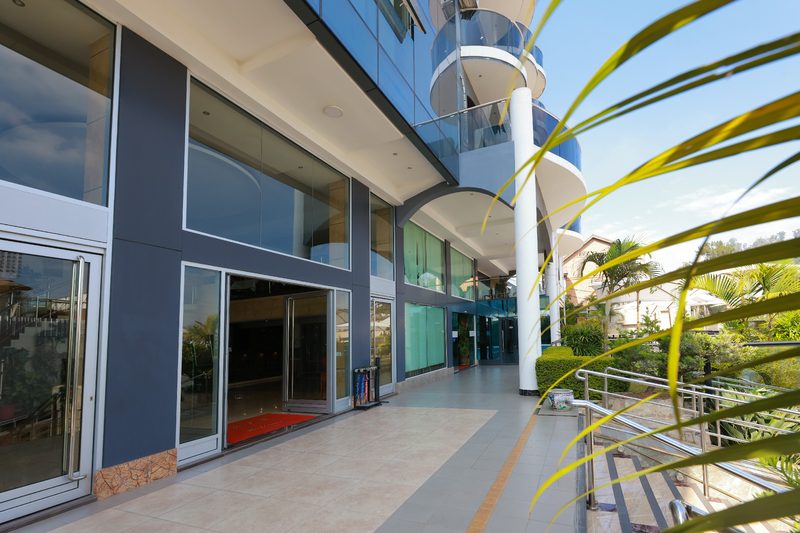
Where to Stay in Madagascar in January
Hand-picked hotels across price tiers for January travellers.
Public Holidays in January
Dates that affect opening hours, transport and crowds
New Year's Day
Observed nationwide as a public holiday.
New Year's Day
Observed nationwide as a public holiday.
Packing Checklist
Bookmark this page — your progress is saved between visits
Need the full list with shopping links?
Climate-specific gear, brand recommendations, and what to leave at home.
View Madagascar Packing List →Essential Tips
Insider knowledge and common pitfalls to avoid
Insider Knowledge
Fly between destinations in January. Skip driving. Madagascar's domestic carrier connects Antananarivo to Nosy Be, Diego Suarez, Sainte-Marie, and several other points. January time savings aren't mere convenience. Often they're the difference between arriving and not arriving. Road conditions deteriorate overnight after single heavy storms. Your four-wheel-drive rental won't help when bridges go underwater. Flights cancel too. Buffer days are essential. Air service recovers faster than washed-out laterite roads.
The mora mora pace isn't optional in January. It's physics. Mud roads slow everything. Ferries wait for weather. Guides scout alternate routes through flooded trail sections. Build at least one buffer day into every itinerary leg. Keep your reaction mild when departure times slide two hours. Visible frustration with delays is rude in Malagasy culture. Honestly, it won't make water recede faster.
Lychee season peaks in January. It hits Madagascar's eastern coast and central highlands. Roadside vendor fruit differs completely from exports. Smaller. Rougher-skinned. Floral perfume hits the moment you crack the shell. Mangoes, jackfruit, and passion fruit also peak now. Fresh-squeezed juice vendors near Analakely market in Antananarivo deserve daily visits. The flavors hit so intense they almost taste fermented. That's ripeness. Not spoilage.
Fady, Madagascar's system of local taboos, shifts by region, by village, sometimes by family. Some seasonal restrictions sharpen during the rainy months. Your guide knows the details. Ask before you point at tombs. Request permission from ancestors before entering certain forest paths. Learn which animals carry sacred status in each village. Never photograph ceremonial sites without explicit permission. Follow your guide's lead on small offerings. This shapes daily life in rural Madagascar in ways invisible until someone explains them.
Avoid These Mistakes
Centering your trip on Tsingy de Bemaraha or Avenue of the Baobabs near Morondava makes sense on paper. These western landmarks dominate Madagascar's tourism imagery. In January, Route Nationale 8 to Morondava floods regularly at multiple river crossings. The Tsingy itself typically closes during wet season. Travelers who build entire trips around these sites often end up stranded in Antananarivo, scrambling to replan. Skip this. Visit the western circuit from June through October instead. Roads stay dry then. Parks remain open.
Buying travel insurance without checking weather-event exclusions is a costly mistake. Standard policies often exclude cyclone disruption or classify it under unclaimable acts of God. Madagascar in January is exactly the scenario those exclusions target. You need coverage that explicitly includes trip interruption, flight cancellation, and medical evacuation from tropical cyclones. Read the exclusions page before purchasing. Do not wait until your domestic flight sits grounded for three days.
Packing for a beach holiday because the guidebook mentions tropical island is a common error. January in the central highlands, where Antananarivo, Andasibe, and Ranomafana sit, drops to 17°C (63°F) at night. Persistent dampness makes it feel colder still. Most first-timers spend their time at 800 to 1,200 m (2,600 to 3,900 ft) elevation, not on the coast. They arrive shivering in shorts and flip-flops at highland lodges where breath turns visible after sundown. Pack layers.
Ready to plan your trip to Madagascar?
Now that you've got the research covered, here's where to go next.
Explore More Activities in Madagascar
Didn't see anything interesting yet?
Browse Viator's full catalog of tours, day trips, food experiences, and private guides in Madagascar.
See All Madagascar Tours on Viator